
PCCF Release Destinations
Plymouth County Correctional Facility is the county’s central jail and house of correction. It holds people awaiting court action, people serving county sentences, and some people held for state or federal authorities. Those groups do not share one release path. A pretrial detainee may leave on bail, personal recognizance, dismissal, or another court order. A person serving a county sentence may leave when the sentence expires or on parole. In both cases, the exit can lead to the community if no other legal hold applies.
Other departures are custody transfers. A person can leave PCCF for the Massachusetts Department of Correction, another county, a federal authority, an outstanding warrant, or immigration custody. The Massachusetts admission and release categories expressly separate community release from transfer and release to another criminal-justice authority. A PCSD transaction showing that its custody ended must therefore be read with the destination and release type. The court docket can show the legal order, while the receiving agency can show continued custody.
Confirm a PCCF Release
PCSD does not publish an official name-search roster, recent-release feed, or permanent release archive. Start with the case and the suspected custody path. The facility main line can address present-custody questions, but the official court and agency records provide the durable trail. A no-result from an unrelated locator is not enough.
- Call PCCF at 508-830-6200 to ask whether the person remains in county custody and what public confirmation route applies.
- Find the committing case in MassCourts. Most remote criminal searches require the exact docket number, so contact the correct Plymouth County clerk when only a name is known.
- Read the docket for bail, recognizance, dismissal, sentence, time served, probation, warrant, or transfer entries. The order is legal authority, not always the physical exit time.
- If state commitment or transfer is possible, use the official MA DOC route to VINELink by full name or commitment number.
- If federal or immigration custody is possible, check BOP or ICE through the exact identifiers those systems require.
- Seek a scoped agency record when current sources do not settle the history.
The full county search and court-routing sequence is covered on the Plymouth County released-inmates search. Keep the exact words used by each source. “Released,” “transferred,” “not in custody,” and “discharged” do not necessarily describe the same event.
PCCF Release Contact
PCCF is staffed around the clock, but that does not mean the records office is available at all hours. The main line is the sound first contact for a present-custody question or for routing to the correct unit. The visitor booklet also lists a facility fax. Do not send sensitive identifiers until staff confirms the right channel.
Plymouth County Correctional Facility26 Long Pond Road
Plymouth, MA 02360
Main: 508-830-6200
Facility fax: 508-830-6201
Facility staffing: 24 hours
For a public-record request, the PCSD Records Access Officer is at 24 Long Pond Road, Plymouth, Massachusetts 02360. PCSD’s current materials list publicrecords@pcsdma.org and jkenny@pcsdma.org, plus 508-732-1867 or the main number at extension 867. Because the department says identifiable incarceration and release information is CORI, an ordinary request is not a promised way to obtain a named person’s release data.
Still, a precise request can identify an existing release sheet or log entry, seek any legally segregable public part, and ask for the exact exemption if material is withheld. A person requesting their own file, counsel with authorization, or another legally authorized requester may have a different route. The PCSD public-records page supplies the current officer and guidance.
PCCF Release Record Fields
The State Auditor reports that PCSD’s internal Offender Management System contains a release date and release type. The public website does not expose those fields. A well-scoped request should identify the person and event closely enough for staff to locate an existing record without asking the agency to create a new analysis.
| Requested field | Why it matters |
|---|---|
| Committed name and booking ID | Separates people with similar names and ties the request to the county event. |
| Release date and time | Shows when PCSD processed the end of its custody. |
| Release type | Distinguishes bail, sentence expiration, parole, court release, or transfer. |
| Authority or order | Connects the physical event to the court or agency decision. |
| Destination or transfer code | Shows whether the person entered the community or another authority’s custody. |
The court docket is a parallel source. It may show the order that allowed bail, dismissal, time served, or probation, but it may not show the minute when PCCF completed processing. If the dates differ, preserve both and explain what each source records. Massachusetts public-record law generally requires a response within ten business days, yet CORI, medical, privacy, security, and other exemptions can limit the result.
Note: Request an existing record and its fields, not a new narrative about why the person left custody.
PCCF Release Lobby Process
The official PCSD visitor booklet gives useful procedure but not a named release list. It says sentenced and parole releases commence after 9 a.m. Monday through Friday. Bail processing occurs when a bail commissioner is available. The booklet describes the Release Lobby as the physical exit point. These facts help with pickup planning, but they do not prove that a specific person has been cleared to leave.
“After 9 a.m.” is a start point, not an appointment or guaranteed pickup time. Records checks, paperwork, court orders, warrants, detainers, and transport arrangements can affect when a person reaches the lobby. PCSD recommends calling about bail eligibility and the amount before travel. The linked booklet is dated April 2021, so current staff should confirm any fee or procedural detail before money or a surety is brought to the facility.
The official PCCF inmate-information page links the release-procedure material. Its screen also illustrates an important local limit: it is an information gateway, not an online roster or 24-hour release feed.
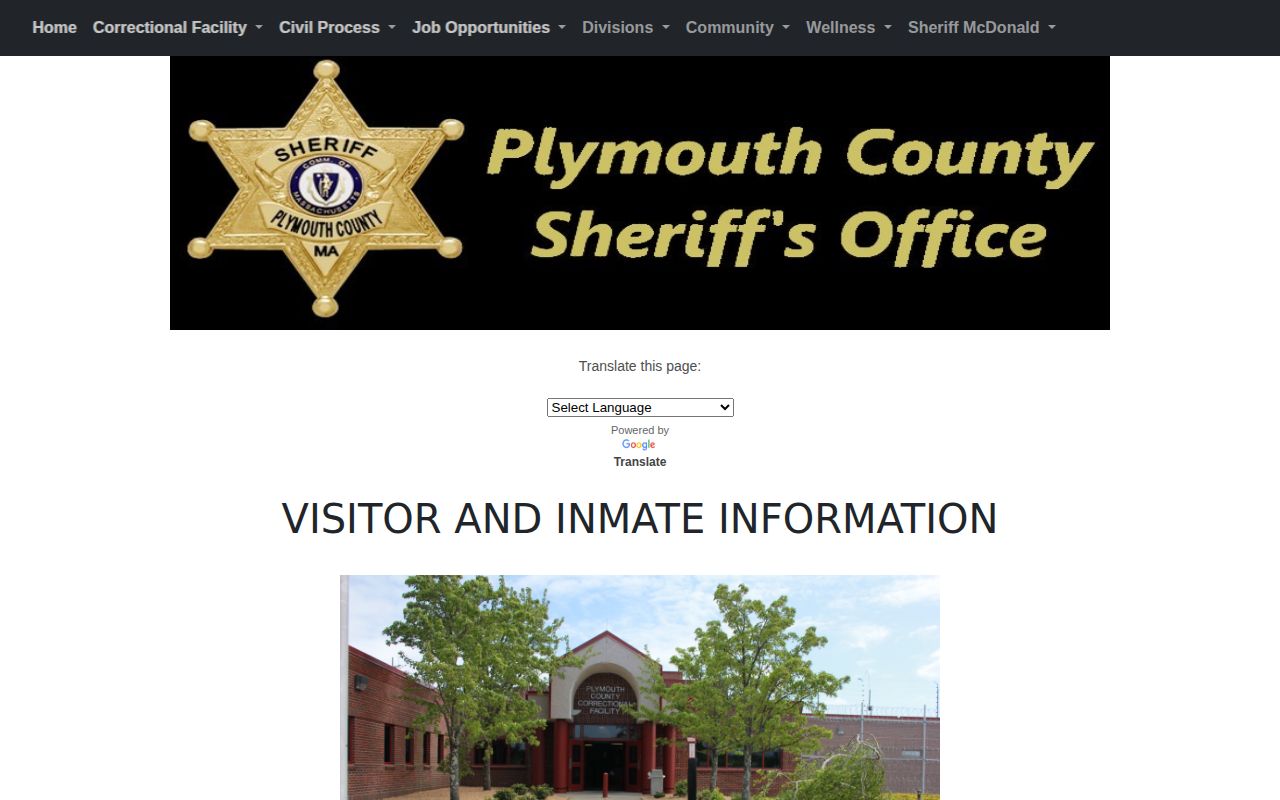
The image supports procedure and contact routing only. A named person’s status still requires PCSD, the court, and any receiving authority.
PCCF ICE Release Checks
PCCF’s mixed population includes people connected to federal and immigration custody. As a result, leaving the county booking population can mean an ICE pickup rather than community release. PCSD records should be read for the local transaction, then the receiving system should be checked for the next status. This is the distinctive custody issue at this facility.
ICE’s Online Detainee Locator accepts either an exact nine-digit A-number with country of birth or exact biographical information. Current ICE guidance covers people in ICE custody and releases from ICE custody within the prior 60 days. That is a short window. A missing result can also reflect transfer, removal, an exact-match error, another authority, or the passage of time. The ICE Detention Reporting and Information Line, 888-351-4024, handles ambiguous cases on weekdays excluding holidays from 8 a.m. to 8 p.m. Eastern.
PCCF Release History Context
PCCF opened in 1994 and PCSD says it can hold up to 1,140 county, state, and federal male detainees. It is separate from the state-run Bridgewater cluster, though the county contains both systems. That mix is why a building name alone cannot identify the legal record holder. County releases belong with PCSD and the court; state-prison releases belong with MA DOC; federal sentences belong with BOP.
A nearby example shows why facility history matters. MA DOC ended housing operations at the separate OCCC-Minimum modular unit in 2024 and transferred its residents to other minimum-security locations. The medium-security Old Colony Correctional Center remained open. That closure did not alter PCCF operations, and it was not a community release from either facility. It simply demonstrates why a person’s disappearance from one unit must be followed to the next custodian.
PCSD also describes exit planning that can begin before a county release and may address identification, food, care referrals, treatment, and transport. Those services help a person prepare, but they are not status evidence. No official source promises a public bus stop at the Release Lobby. Pickup plans should be confirmed with the person and the reentry team.
Public Record Search
Sponsored Results