
Plymouth Center Release Paths
The state’s official location page describes the Plymouth Substance Abuse Center, also known as the Massachusetts Alcohol and Substance Abuse Center at Plymouth, as serving two populations. One consists of criminally sentenced minimum-security men. The other consists of men civilly committed for an up-to-90-day detoxification program. The same address can therefore produce a DOC sentence record or a Section 35 court and treatment record.
A sentenced person may leave on parole, at sentence discharge, through a court event, or by transfer to another institution or authority. A civil patient’s placement follows the ordering court and treatment process. Completion of a civil treatment commitment is not a criminal discharge. Likewise, the end of a criminal sentence does not prove that a separate civil order never existed.
| Population | Release source | Key limit |
|---|---|---|
| Sentenced minimum-security person | MA DOC/VINELink, parole, court, and DOC certificate | A facility transfer is not community release |
| Section 35 civil patient | Ordering court and treatment-placement record | Medical privacy limits public detail |
| Status unclear | Placement paperwork, court docket, and facility routing | Do not merge the two legal authorities |
Plymouth Sentenced Release Search
For the sentenced population, the official Massachusetts prison-search instruction routes users to VINELink. The Commonwealth says only MA DOC participates in Massachusetts VINE. Search by full first and last name or commitment number. Record the exact custody status, reporting agency, facility, and any date label shown. Do not turn a projected date into an actual release date.
- Open the state’s MA DOC locator instruction and follow the Massachusetts VINELink link.
- Search the Massachusetts Department of Correction by full legal name or commitment number.
- Compare the result with the court sentence and any parole decision or record.
- If the person moved or no longer appears, do not presume community release.
- Request the certificate of discharge/release and public date-computation material for durable proof.
A parole release means the person left physical custody while the sentence remained under Board supervision. A discharge means the relevant sentence authority ended. A transfer means custody continued elsewhere. These terms must remain distinct. The Plymouth County released-person search provides the broader routing chain when county, state, federal, or court records may overlap.
Note: Massachusetts VINE is a state DOC route, not a public Section 35 treatment-status search.
Plymouth Civil Treatment Discharge
Section 35 is a civil process. The ordering court and treatment system control the placement, not a criminal sentence. A civil patient should not be called an offender or inmate merely because treatment occurs at a secure DOC-operated location. The court file may identify the order and later public action, while clinical information remains protected.
Begin with the court named on the commitment paperwork. MassCourts can display public docket and event information, but remote access can be limited. If the docket number is not known, contact the clerk or use a courthouse public terminal where court rules allow broader access. Ask for the public order and disposition rather than private treatment notes.
A placement may end because the authorized period concluded, the court acted, or the person moved within the treatment system. Public records may not disclose the details that a relative wants. Medical privacy can bar release of health information without consent or other legal authority. A refusal to disclose clinical material is not evidence that the person remains in treatment.
Plymouth Center Release Records
The criminal and civil record requests should remain separate. For a sentenced person, ask MA DOC for the certificate of discharge or release, actual custody-release date, release type, release institution, and public parts of the release order and date-computation record. The certificate process includes central sentence and earned-time review before approval.
For a civil patient, identify the ordering court, docket, approximate dates, and the public order sought. Ask the treatment record holder only for material that can lawfully be released and explain any authority or consent supporting the request. Do not ask one office to create a combined narrative about court action and clinical care.
- Section 35
- A Massachusetts civil court process for substance-use treatment commitment.
- Parole
- Release from physical custody while a criminal sentence remains supervised.
- Discharge
- The end of the stated legal authority, which must be named.
- Transfer
- Movement to another facility or authority without community release.
Massachusetts public-record law generally requires a response within ten business days to a reasonably described request. Medical, privacy, security, CORI, sealed, and other restrictions may apply. Seek reasonably segregable public parts and a written explanation for any withholding.
Plymouth Center Release Contact
The facility has a physical address in Myles Standish State Forest and a separate mailing address. The two published phone numbers offer public routing. Call before mailing anything that contains personal identifiers, and confirm the correct office for a sentence record, civil court question, or authorized treatment inquiry.
Plymouth Substance Abuse Center1 Bump Pond Road
Plymouth, MA 02360
Mail: P.O. Box 207, South Carver, MA 02366
508-291-2441 or 508-295-0368
Agency: Massachusetts Department of Correction
For state sentence records, MA DOC’s Records Access Officer is Kate Silvia, 50 Maple Street, Milford, Massachusetts 01757, at 508-422-3436 or doc.rao@state.ma.us. The department’s request page accepts online, email, and mail submissions and makes clear that DOC does not handle county jail requests.
The official Plymouth Substance Abuse Center page is the successful manifest source matched to the facility.
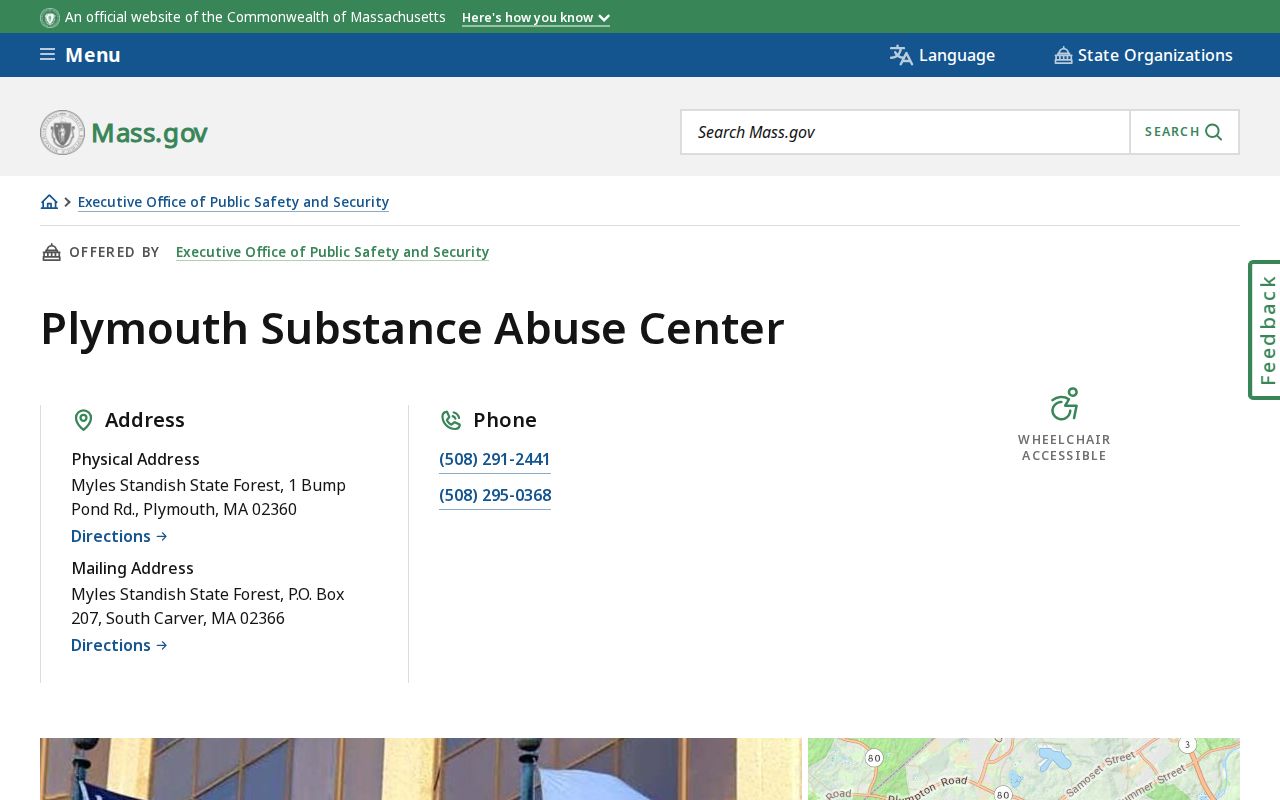
The capture confirms the official facility identity and public contact details. It does not disclose a civil patient’s treatment status or prove a sentenced person’s release.
Plymouth Center Release Proof
Durable proof should state which authority ended. For a sentenced person, the DOC certificate and court or parole record can distinguish discharge, parole, transfer, and continued custody. For a Section 35 patient, the public court order and authorized placement record can identify the end or change in civil commitment. Neither evidence set substitutes for the other.
A live locator helps only when its participating agency holds the relevant record. A no-result can reflect spelling, archive status, timing, transfer, nonparticipation, or an access restriction. Do not write “released” from silence. Instead, preserve the exact response and move to the court or record holder that controlled the placement.
Families often want care details that are not public. The best route is consent or another lawful authorization where available. A public status inquiry should stay narrow: the legal order, placement dates if releasable, destination authority, and whether the requested office holds a responsive record.
Plymouth Release History Context
Plymouth County’s facility mix makes legal authority more important than the building. PCCF is the county jail. Old Colony is a state prison. Massachusetts Treatment Center has sentence and civil-commitment tracks. Bridgewater State Hospital is a forensic hospital. Plymouth Substance Abuse Center combines sentenced and Section 35 treatment populations. A single county release list could not accurately represent those systems.
The separate OCCC-Minimum modular unit stopped housing residents in 2024. MA DOC transferred that population to other minimum-security settings while medium-security Old Colony remained open. That event did not change Plymouth Substance Abuse Center operations. It also was not a community release, and it says nothing about the status of a civil patient or sentenced person at this center.
The closure is a useful local lesson. A person can leave one facility or unit while the same state authority continues custody elsewhere. At the Plymouth center, always verify whether the relevant record is a DOC movement, a criminal release, a parole event, or the end of a Section 35 placement before describing the outcome.
For the sentenced track, the useful historical request names the release institution, actual custody-release date, release type, and public portions of the date-computation record. For the civil track, identify the Section 35 ordering court and request the public order or docket event. A medical record is different and may require the patient’s authorization or another lawful basis for access.
Public Record Search
Sponsored Results